

Understanding This Month's Garden Jobs Finder
A practical guide to This Month's Garden Jobs Finder: what it means, how it works, and how to use the interactive this month's garden jobs finder.
A lawn in Kent and a lawn in Aberdeen are rarely ready for the same job on the same date, so timing matters as much as the task itself. This section sets out what your garden needs, when it actually needs it, and when a job can safely wait until the weather or the season catches up. If you're not sure whether something needs doing now, the Can It Wait? Home and Garden Urgency Checker asks a few short questions about the job and the month and gives a steer on whether to act this week, leave it until spring or autumn, or call in a professional. If you'd rather see a list built around your own garden than a general one, try this month's garden jobs finder and tell it your garden type, region and whether you have a shed.
See how common materials and methods compare Check what's due in the garden this AprilWhat a garden needs at any given moment depends far more on the month than on any fixed routine, which is why the jobs on this site are organised by when you do them rather than by plant type or task category. A lawn that needs scarifying (removing the dead thatch that builds up at the base of the grass) in September has nothing useful for you in April, when the priority is more likely to be the first mow or getting seedlings hardened off before planting out.
Timing also shifts with where you are. A frost date in Kent can sit a month or more ahead of one in the north of England or in Scotland, so advice that says simply 'prune in March' is only half an answer. Where it matters, the guidance on this site gives a range rather than a single date, and says which end of the country each end applies to.
Scarifying and aerating solve different problems, and doing one when you needed the other wastes an afternoon. Scarifying pulls out dead thatch and moss so water and air can reach the soil; aerating spikes or cores the lawn itself to relieve compaction underneath. A lawn that puddles after rain usually wants aerating. A lawn that feels spongy and looks patchy under the green usually wants scarifying first.
Most border maintenance is small and frequent. Deadheading, removing spent blooms so the plant puts energy into further flowering rather than seed production, is the clearest example: a few minutes with secateurs most weeks through summer does more than one big session in September. Pruning is more time-sensitive, since cutting at the wrong point in a plant's cycle can remove the following season's flowers.
Tender plants, anything not bred to survive a UK winter outdoors, need either moving under cover or protecting in place before the first hard frost arrives. Overwintering is the general term for this, and what it involves varies a great deal by plant: some need nothing more than a sheltered spot against a wall, others need lifting and storing somewhere frost-free entirely. Waiting until frost has already damaged the foliage usually means you have already lost the plant, so this is one of the few garden jobs where the calendar matters more than convenience. If you are unsure whether a particular plant needs attention this week or can safely sit through another cold spell, the Can It Wait? Home and Garden Urgency Checker asks about the symptom and the current month and gives a verdict, though it works from what you tell it, so an unusual variety or an unusually sheltered spot may still need your own judgement over its answer.
Soil pH, how acidic or alkaline your soil is, affects what will actually grow well and is worth checking before you plant something that consistently struggles for no obvious reason. Mulching, laying a layer of organic material over bare soil, suppresses weeds and holds moisture, and is one of the few jobs that helps almost any garden almost any time it is applied, though autumn and spring get the most out of it. Neither job is urgent in the way a frost warning is urgent, but both save repeated effort later.
For what applies right now, This Month in Your Garden and Home tracks the current jobs directly, and each month from January onward has its own page if you want to plan ahead or check what you missed. Where a garden job overlaps with the house itself, such as guttering that feeds a border or a wall that shades a bed, the home maintenance side of this site covers the building side of that overlap. If you would rather see this matched to your own plot than work through the general list, This Month's Garden Jobs Finder asks for your garden type, your region and whether you have a shed, and returns a short list of what genuinely needs doing now against what can wait. It draws on the same seasonal guidance as the rest of the site, so it can still be wrong for a garden with unusual soil or shelter, but it is a quicker way to see what applies to you than reading month by month.
Guidance organised by month and by job, covering lawns, borders, hedges, sheds and the seasonal checks most UK gardens need. If you want a shorter list for your own plot, This Month's Garden Jobs Finder narrows it down by garden type, region and shed status. If you are instead trying to work out whether a particular job is urgent, try the Can It Wait? Home and Garden Urgency Checker, which asks a few questions about the symptom and the month and gives a steer on whether to act now, wait for the next season, or call in a professional.
A practical guide to This Month's Garden Jobs Finder: what it means, how it works, and how to use the interactive this month's garden jobs finder.

A practical guide to Pre-Spend Checklist Builder: what it means, how it works, and how to use the interactive pre-spend checklist builder.
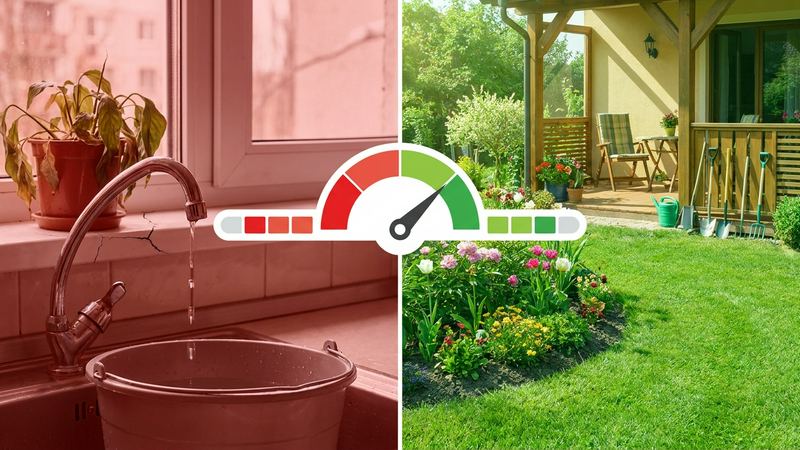
A practical guide to Can It Wait? Home and Garden Urgency Checker: what it means, how it works, and how to use the interactive can it wait? home and garden urgency checker.